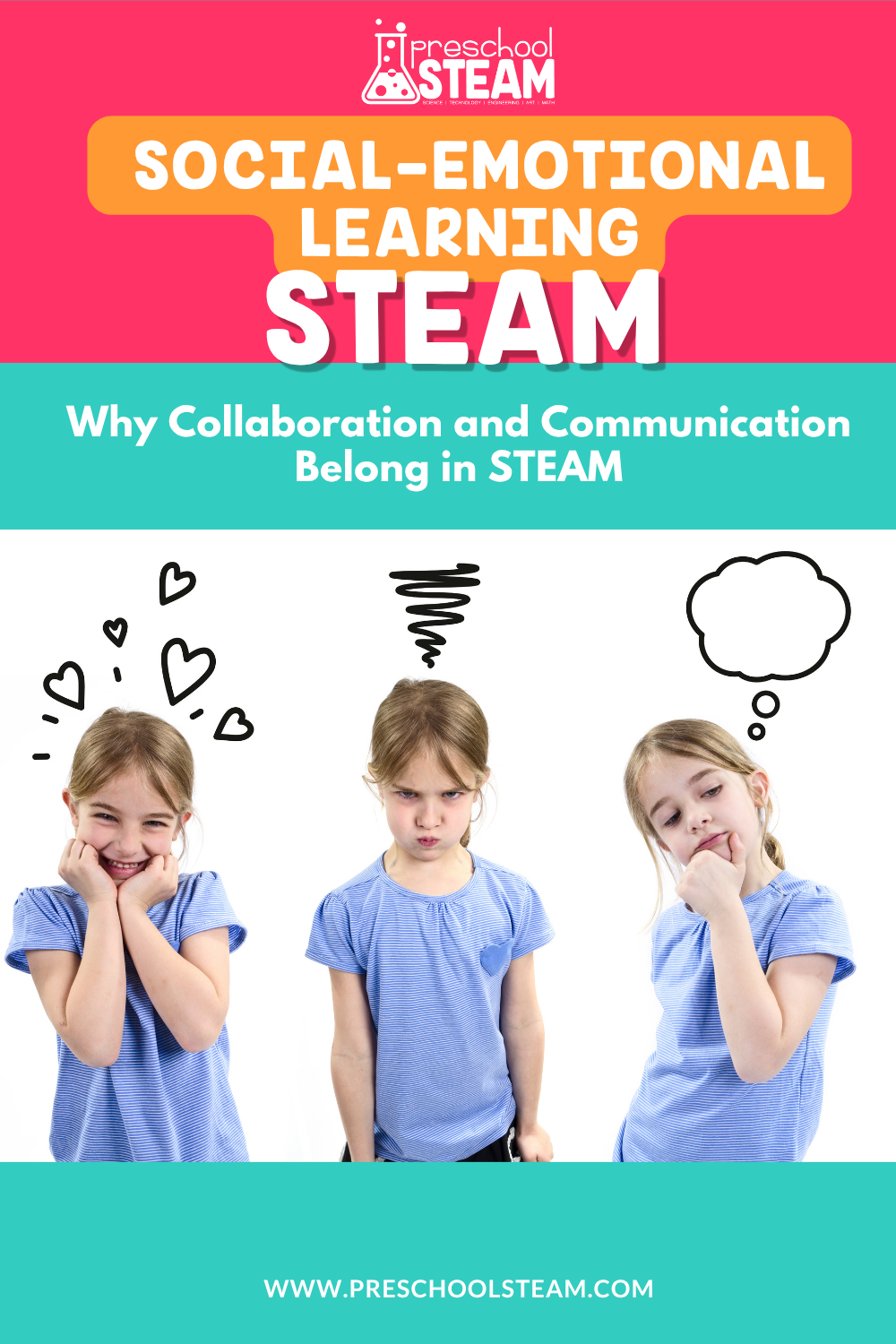
Social-emotional learning and STEAM might sound like two separate parts of your day, one for feelings and one for building, but they are more connected than they look. Every time preschoolers work together on a build, test an idea as a group, or explain their thinking to a friend, they are practicing SEL skills like collaboration and communication right alongside science, technology, engineering, art, and math. This month’s Social-Emotional lessons are designed to do both at once.
The SEL Skills Hiding Inside Every STEAM Challenge
Science, technology, engineering, art, and math are often thought of as academic skills, but for preschoolers, they are also social skills in disguise. Every time two children build a tower together, negotiate who holds the blocks, or explain why they think a ramp needs to be steeper, they are practicing collaboration and communication at the exact same time they are practicing engineering.
That overlap matters. Children ages 3 to 6 are still learning how to share ideas, take turns, and listen to a friend who sees things differently. STEAM challenges give them real reasons to practice those skills, because the challenge only works if everyone contributes. A group can not build a bridge, sort a collection, or design a habitat alone. They need each other, and that need is what makes the social-emotional learning stick.
A Few Favorites for Building Connection
Here is a peek at some of the hands-on, screen-free lessons we love for building connection and communication skills in your learning space.
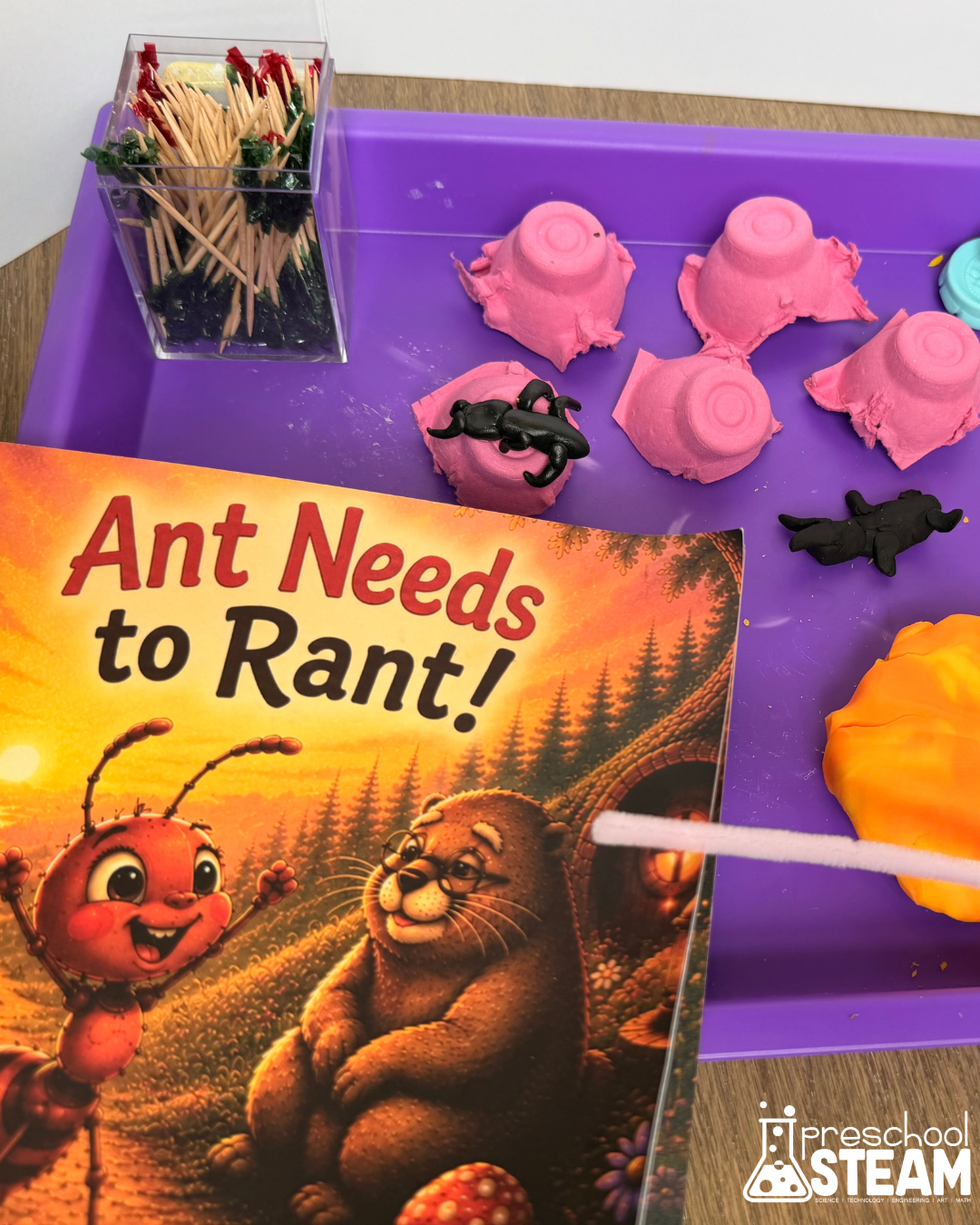
Build a Better Ant Hill, we paired with the book Ant Needs to Rant! by Cassie Shrum, where children construct a hill out of egg cartons, play dough, and toothpicks, then test it against a “foot test” to see if it holds up. Afterward, they talk about how Ant felt when his hill was almost stepped on, and what makes something worth protecting, even if it seems small to someone else. It is a hands-on way to connect a building challenge to real conversations about empathy and what matters to a friend.
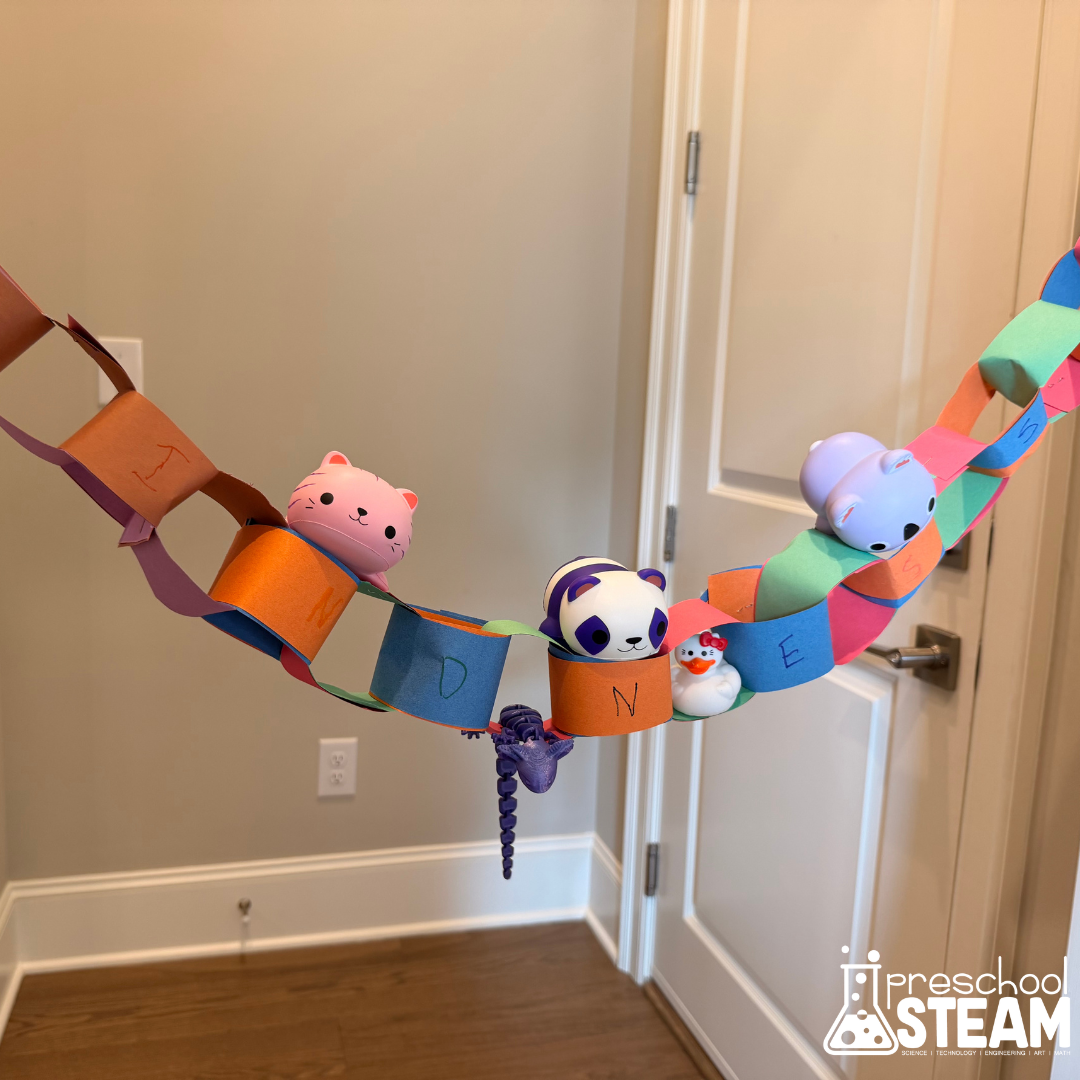
The Pack Chain, paired with The Pack That Had Each Other’s Back by Jillian Staci, we had each child decorate a paper strip to represent something unique about themselves, then loop and tape it into a link. All the links connect into one long class chain, which children test by draping it like a bridge and hanging a small toy from a single link, then from the whole chain. The chain holds far more weight connected than any one link can on its own, a hands-on echo of how Zoey’s group of friends in the book look out for one another.
Each of these lessons comes with the guiding questions, teaching strategy, and full Invite Play to Observe Wonder to Extend STEAM breakdown inside the Member Lab.
Simple Ways to Build These Skills Into Any STEAM Challenge
You do not need a brand new lesson to work on collaboration and communication. A few small shifts can turn almost any activity in your learning space into a chance to practice these skills.
- Give one set of materials to a pair or small group instead of one set per child, so sharing and negotiating become part of the challenge itself.
- Ask open ended questions after the activity, like what was hard about working together or how did you decide whose idea to try first.
- Model the language you want to hear, like asking a friend if you can have a turn or telling a friend you like their idea.
- Let children use a sketch or a simple drawing to show a partner what they are picturing, especially for children who are not ready to explain it with words yet.
Want the Full Lessons, Done for You?
If you would rather not build these conversations from scratch, our Social-Emotional unit inside the Member Lab has you covered with full lesson plans, guiding questions, and hands-on builds designed to teach collaboration and communication through play. You will find it inside the Member Lab along with 700 plus other done-for-you STEAM lessons.
What is your favorite way to help preschoolers work through a disagreement or share an idea with the group? I would love to hear about it.


Leave a Reply