What can you do with all those leftover glow sticks and glowing materials from October?
Don’t pack them away just yet!
Turn them into a Preschool Glow Lab where children can investigate light, color, shapes, and shadows through hands-on play.
With a few simple materials and a little curiosity, you can transform an ordinary classroom space into a place for glowing discoveries.
Here are three playful invitations to get started.
Invite Play: What Happens When the Lights Change?
Begin by reading Flashlight by Lizi Boyd.
This wordless picture book invites children to notice how light reveals different things in the dark.
Ask: “What do you think we might discover when we change the light?”
Gather your leftover glow materials, choose a safe area with adjustable lighting, and introduce one or more of these invitations.
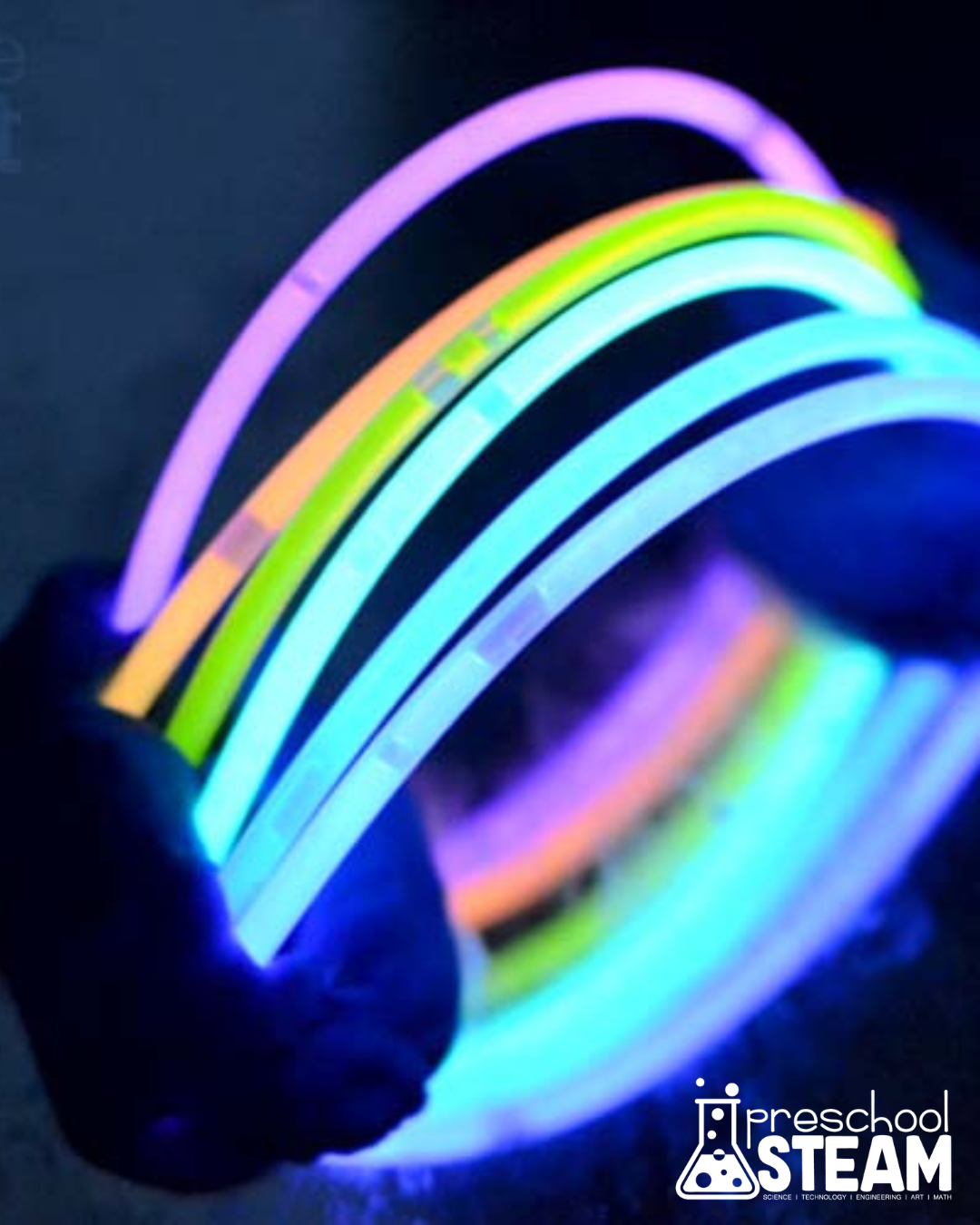
1. Glow Stick Rainbows: Can You Build a Glowing Rainbow?
Have leftover glow sticks?
Invite children to investigate how they can arrange glowing sticks into curves, arches, and colorful designs.
Can they create a rainbow?
What other shapes could they make?
What happens when they change the order of the colors or combine their designs?
Children can explore shape, color, pattern, and spatial relationships while creating their own glowing artwork.
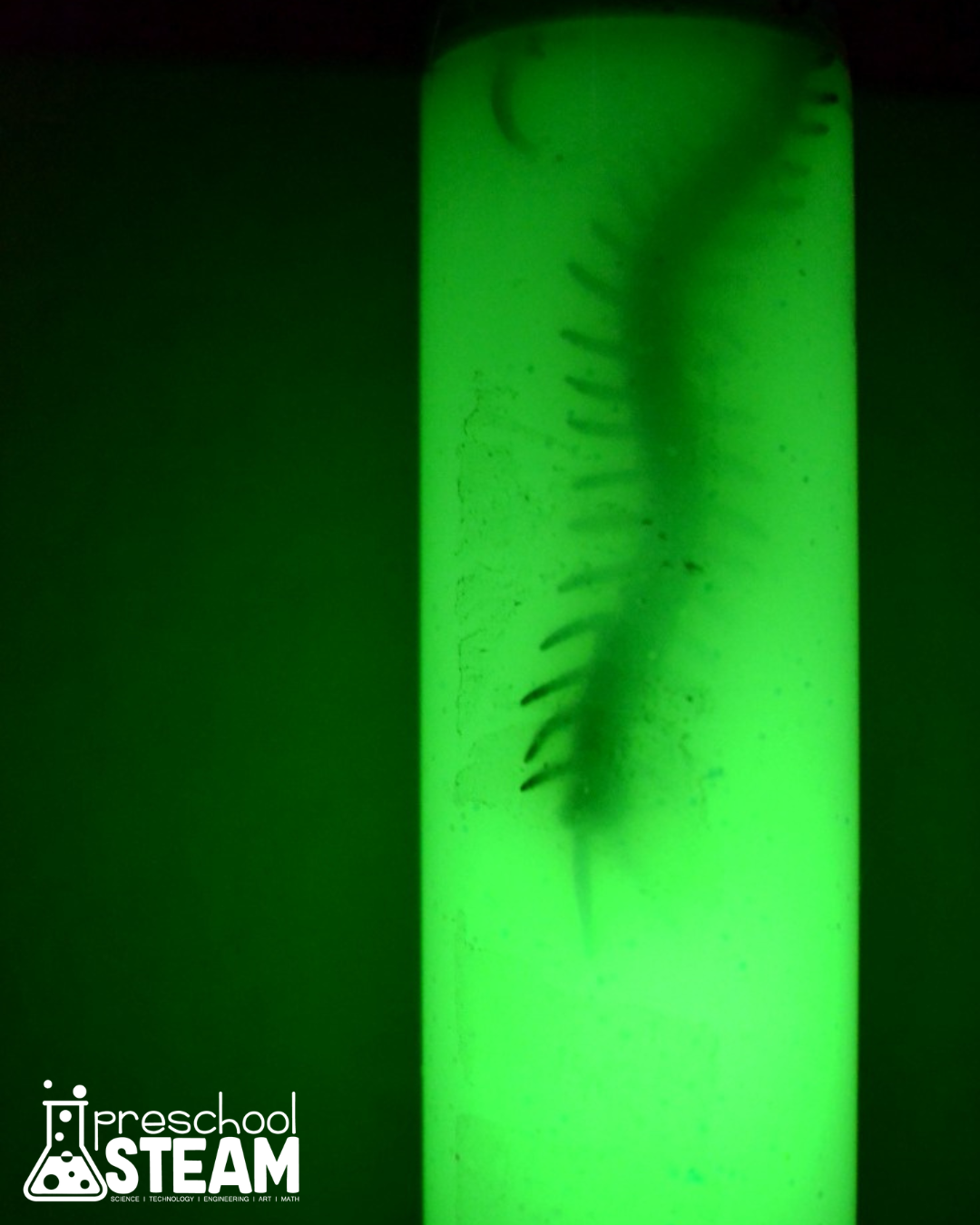
2. Glowing Discovery Bottles: What’s Hiding in the Light?
A glowing bottle can become an invitation to look more closely.
Offer a sealed, adult-prepared illuminated sensory bottle containing age-appropriate objects or silhouettes.
Invite children to observe what they can see.
Does the object look different when the bottle moves?
Can they describe its shape?
What details can they notice?
Children can compare what they observe in different lighting conditions and use descriptive language to share their discoveries.
Use a purpose-made, securely sealed light source rather than cutting open glow sticks or placing loose batteries inside a bottle.
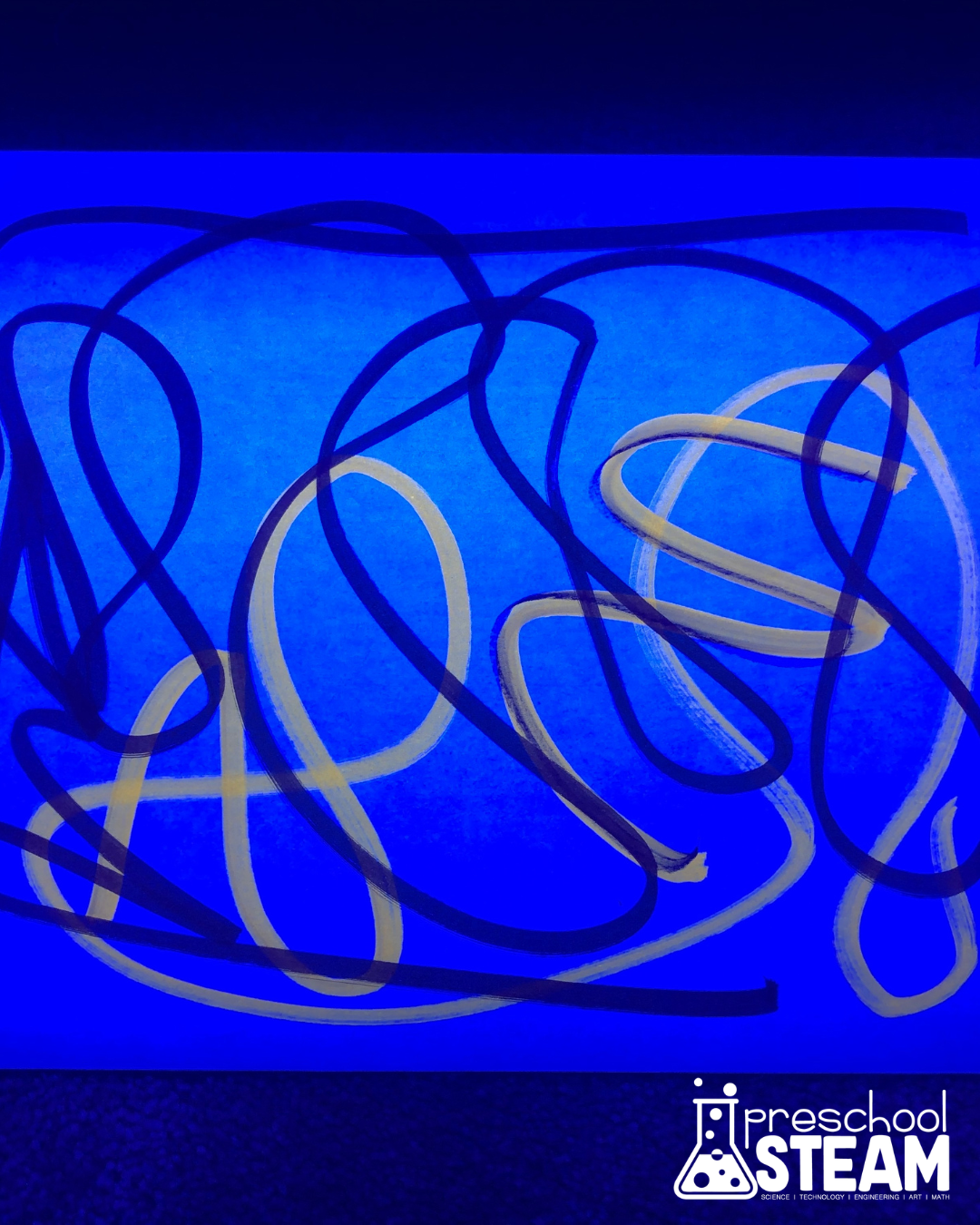
3. Blacklight Art: What Happens to Our Colors?
Some art materials look completely different under blacklight.
Offer suitable fluorescent paper or markers and invite children to create freely.
Then explore their artwork under a supervised, age-appropriate UV-A blacklight.
What changes?
Which marks appear brightest?
Do all colors react the same way?
Children can experiment with lines, shapes, patterns, and color combinations while discovering how different materials respond to light.
Keep the blacklight under adult control and follow the manufacturer’s eye and skin safety guidance.
Observe Wonder: Follow Their Curiosity
As children explore, pay attention to what surprises them.
Perhaps they discover that some colors appear brighter than others.
Maybe they become fascinated by how glowing sticks can form different shapes.
Or they might notice that an object inside a glowing bottle creates an interesting shadow.
Rather than explaining everything immediately, ask:
- “What do you notice?”
- “What changed?”
- “Why do you think that happened?”
- “What else could you try?”
These simple questions help children observe, compare, predict, and investigate.
A Little Glow Can Spark a Lot of Wonder
You don’t need a complicated setup to introduce meaningful STEAM learning.
A handful of leftover glow materials, an interesting picture book, and a few open-ended questions can lead to investigations that children make their own.
And the best part?
This experience isn’t just for October. A Glow Lab can bring light, color, and discovery into your classroom any time of year.
Invite Play → Observe Wonder → Extend STEAM
Start with play. Follow the wonder.
Looking for More Play-Based STEAM Experiences?
The Preschool STEAM Lab includes more than 700 hands-on STEAM experiences designed to help educators bring science, technology, engineering, art, and math into everyday classroom play.


Leave a Reply