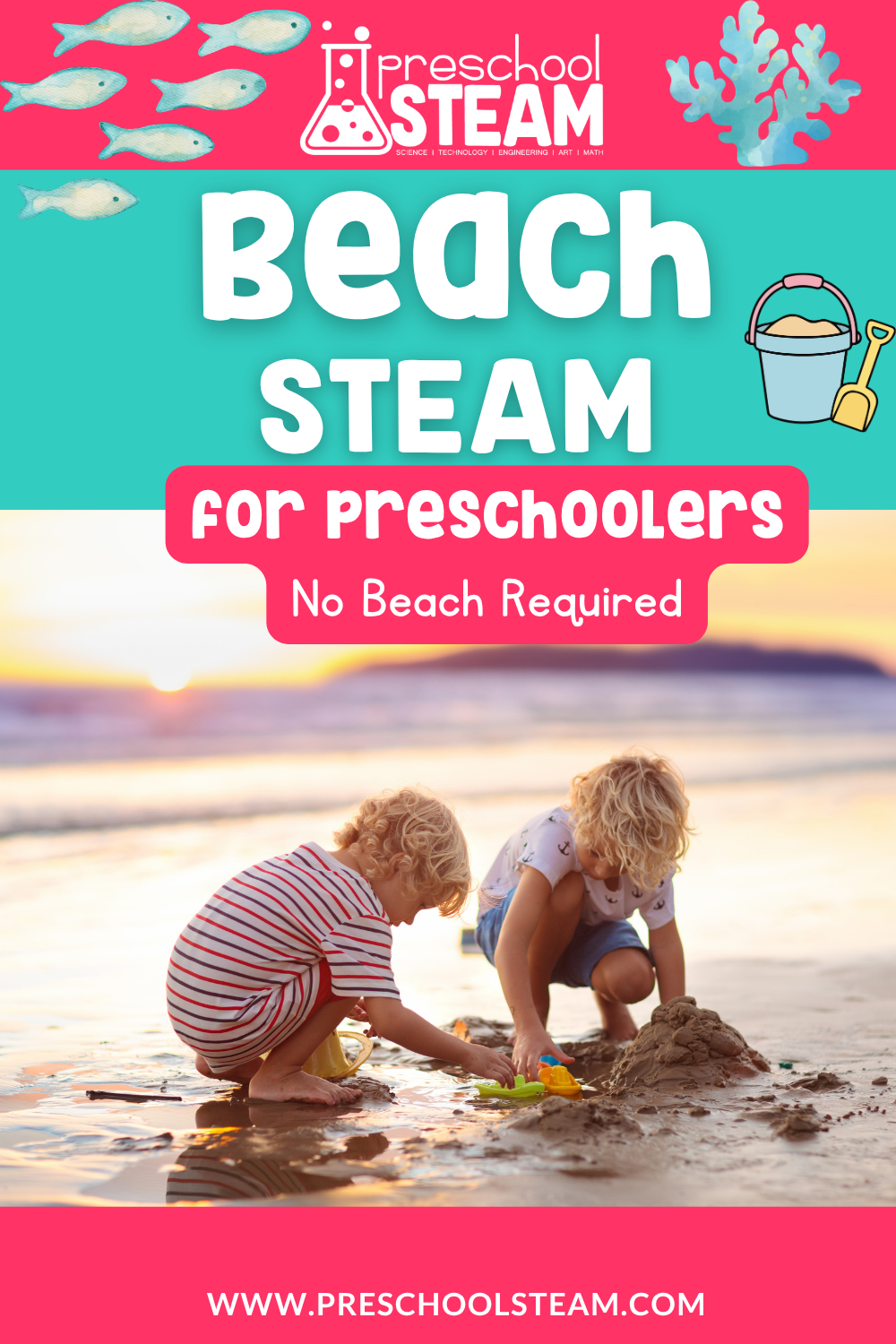
Beach exploration is one of the most exciting STEAM topics for young children. The sand, the shells, the waves, the creatures — it all sparks wonder. But if you don’t live near a coast, it’s easy to skip past beach themes and assume they won’t feel real enough to hold your little learners’ attention.
They will. And you can bring the beach to your learning space with a few simple materials.
Why Beach Themes Work So Well for STEAM
The beach is naturally cross-curricular. Think about what happens when a child picks up a seashell. They notice the shape, the texture, the ridges, the color. They compare it to another shell. They sort them by size. They ask where it came from and what lived inside it.
That’s science, math, and critical thinking happening all at once, without a single worksheet.
Beach themes also lend themselves to engineering (building coral reefs or sandcastles), art (painting ocean scenes or creating sea creatures from recycled materials), and literacy (some of the best picture books for young children are set at or near the beach). It’s one of those topics where every STEAM domain shows up naturally if you set up the right invitation.
3 Ways to Bring Beach Discovery Into Your Space
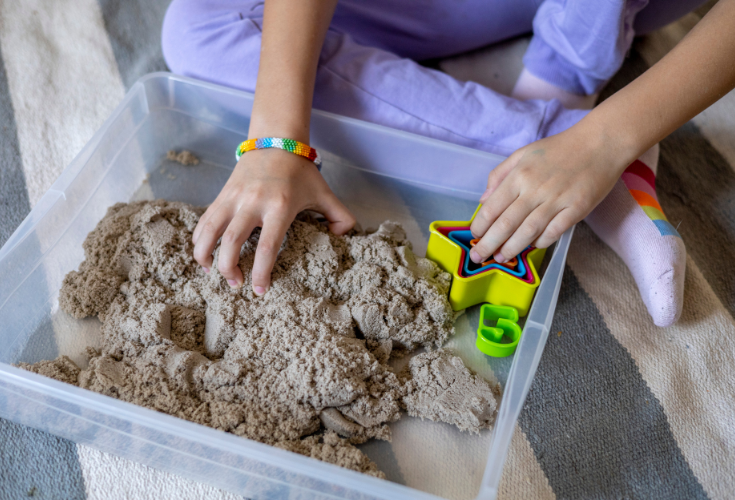
Start with a sensory tray. Fill a shallow bin with sand, add water to one side, and set out seashells, smooth stones, and plastic sea animals. This is an open-ended setup that invites exploration without any instruction. Your little learners will dig, sort, pour, and build on their own. Watch what they do and listen to what they say — their questions will tell you exactly where to take the learning next.
Read a beach picture book. Books like Swimmy by Leo Lionni, Hello Ocean by Pam Muñoz Ryan, and A House for Hermit Crab by Eric Carle are perfect for connecting literacy to beach exploration. Read one before setting up your sensory tray and watch how the story shows up in their play. A child who just heard about Hermit Crab looking for a new shell will approach a tray of seashells very differently than one who didn’t.
Ask a big question. “What do you think lives at the bottom of the ocean?” or “How do waves move?” are the kind of questions that get little learners thinking like scientists. You don’t need to have the answer ready. The goal is to spark curiosity and then follow it wherever they take it. That wondering is the foundation of real STEAM learning.
From Exploration to Intentional Learning
Setting up a sensory tray and reading a book is a great start. But if you want to turn that exploration into a full week of intentional, connected STEAM learning, that’s where having a plan makes the difference.
Inside the Preschool STEAM Member Lab, you’ll find our full Beach STEAM Unit packed with lessons that take ocean and beach exploration to the next level. Plus, the Summer Explorers Play Guide includes a complete Beach and Ocean Discovery week with lessons on exploring seashells, sand investigations, building coral reefs, and a Storytime STEAM activity paired with Jabari Jumps. Each lesson comes with step-by-step directions, photographs, guided STEAM questions, and a downloadable one-page guide you can print and use right away.


Leave a Reply