I can’t stop noticing how “manufactured” Valentine’s Day has become in early childhood classrooms.
Pre-written cards.
Candy exchanges.
Tiny trinkets that feel exciting for about five minutes and then quickly turn into clutter.
Adults decide what the project should look like, what the heart should look like, and sometimes even what the message should say.
It’s all very sweet but also very controlled.
What gets lost in the rush to make Valentine’s “special” is the one thing young children are actually good at: deciding for themselves what giving, caring, and creating look like.
When everything is pre-planned and pre-shaped, there’s very little room for curiosity, interpretation, or real expression. Valentine’s Day could be an invitation for wonder, not another adult-directed task.
Not a craft that needs to be finished.
Not something that has to look cute or recognizable.
What happens when we stop deciding the outcome for them?
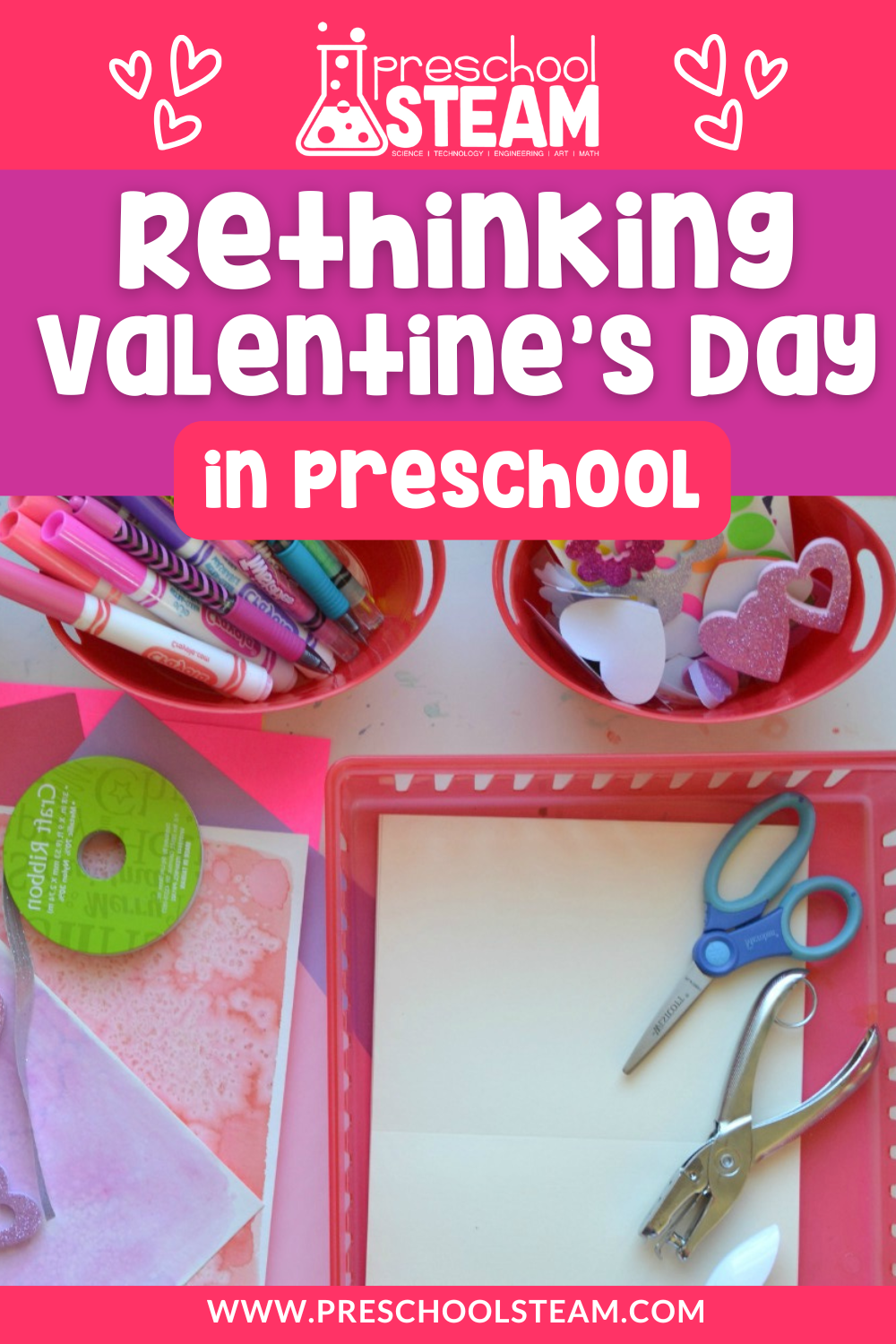
When we set out materials without an example, without instructions, and without an expectation of what a Valentine “should” be, children do something interesting. They lead. They experiment. They create meanings that actually belong to them.
That’s the difference between a manufactured moment and an open-ended one.
Instead of trying to reinvent Valentine’s Day, I’ve found it more helpful to step back and remove the pressure altogether.
One simple shift is offering an open-ended process art space rather than a finished project.
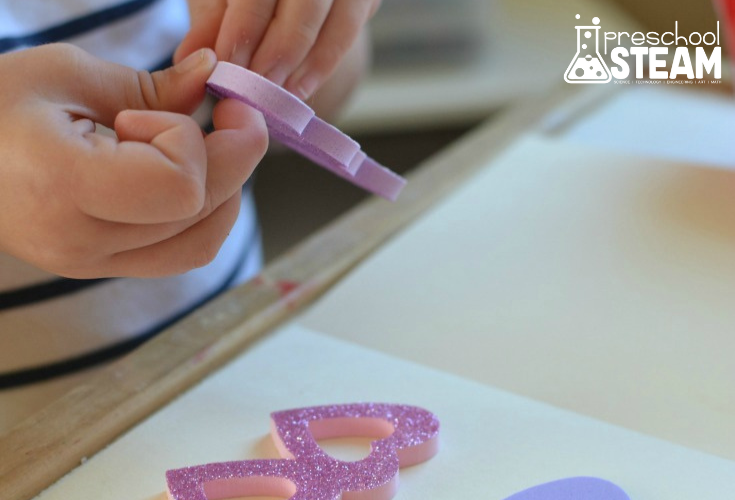
No example.
No instructions.
No expectation that what’s created will look like a heart, a card, or even a Valentine at all.
When materials are simply available, and the outcome is undefined, children approach the experience differently.
– Some layer.
– Some tear.
– Some combine materials in unexpected ways.
– Some talk through what they’re making. Others work quietly, focused more on the process than the result.
What’s interesting isn’t what gets made, it’s how children decide what matters to them in that moment. Who they’re creating for. What feels worth their time. What they want to explore next.
This kind of open-ended invitation doesn’t ask children to perform. It asks them to think, choose, and express in ways that actually belong to them.
Moments like this are a good reminder that meaningful learning doesn’t come from perfectly planned activities.
It comes from trusting children enough to let them lead and trusting ourselves enough to step back when an outcome isn’t necessary. When we stop trying to make every moment look a certain way, planning starts to feel lighter. Decisions become simpler. Teaching becomes more responsive.
You don’t need to add more to your plate to make days like Valentine’s Day meaningful. You don’t need a new idea or a cuter project. Often, the most intentional choice is removing the expectation and letting curiosity take over.
This is the thinking behind the way I approach play-based STEAM: fewer plans, more observation, and simple extensions only when they’re truly needed.
Not because it’s easier, but because it respects how young children actually learn.
Valentine’s Day doesn’t have to be manufactured to matter. Sometimes, less direction creates more meaning.
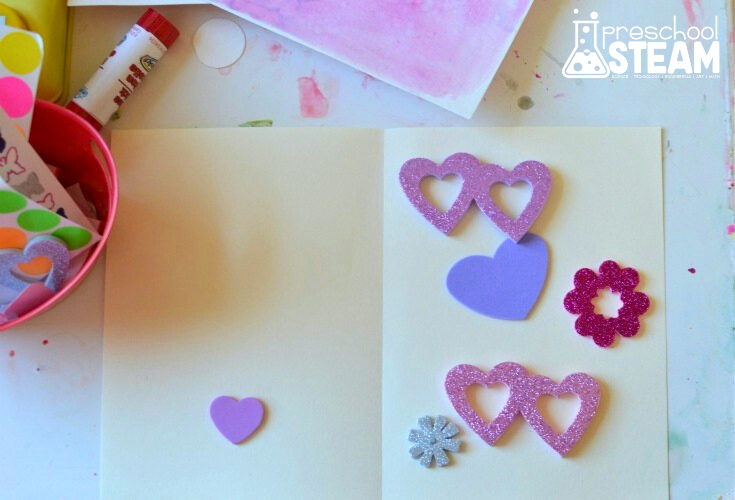
What an Open-Ended Valentine’s Process Art Invitation Can Look Like
An open-ended Valentine’s invitation doesn’t need a theme, a sample, or a finished goal.
It starts with a simple setup.
Choose a workspace where children can spread out and work comfortably like a table, a tray, or even the floor.
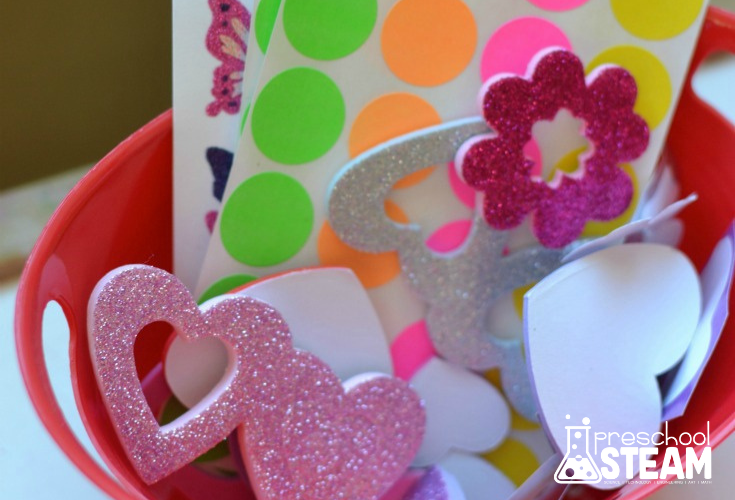
Set out a small collection of materials with different possibilities: papers to layer or tear, mark-makers, stickers, textures, loose pieces. Nothing fancy. Nothing labeled.
There’s no example on the table and no instructions on what to make.
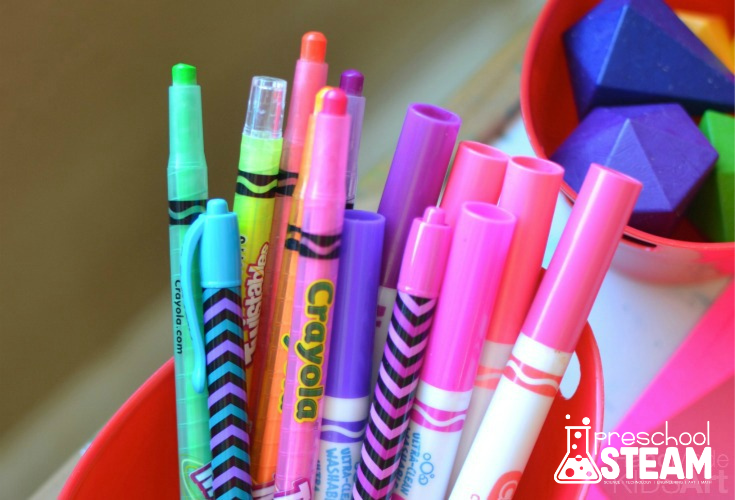
The invitation can be as simple as:
“You can use these materials in any way you’d like.”
From there, your role shifts from directing to noticing.
Some children may work quickly and move on. Others may stay for a long time, focused and quiet. Some will talk through their thinking. Others will experiment, change their minds, or start over entirely.
There’s no need to step in unless support is requested or safety becomes an issue. The learning is happening in the choices they’re making, what they pick up, how they combine materials, and when they decide they’re finished.
This kind of invitation isn’t about what children produce. It’s about giving them space to decide what matters to them in that moment.
And that’s what makes it meaningful.
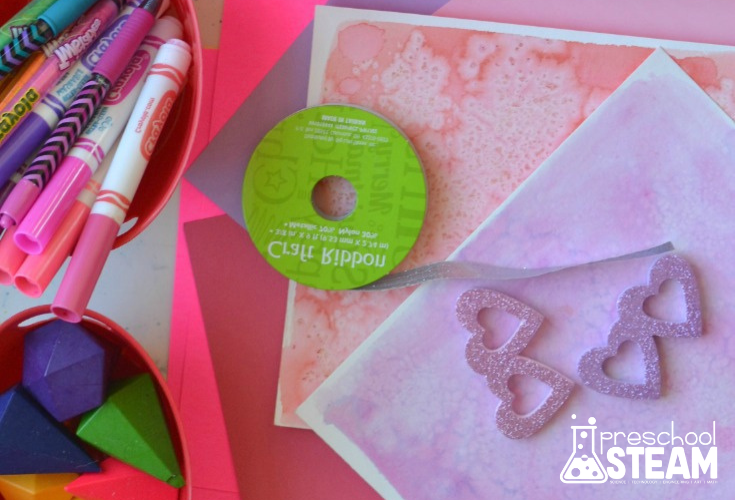
Valentine’s Day doesn’t need more structure to be meaningful. It needs more trust.
When we step back from deciding the outcome, children show us what they’re capable of, thinking for themselves, expressing care in their own ways, and staying engaged because the work actually belongs to them.
This is true on Valentine’s Day, and it’s true the rest of the year.
Meaningful learning doesn’t come from perfectly planned activities or projects that all look the same. It comes from open invitations, careful observation, and knowing when to let the process be enough.
You don’t need to add another idea or create something new to make days like this matter. Often, the most intentional choice is to remove the expectation and let curiosity lead.
That’s the approach behind play-based STEAM: fewer plans, more noticing, and thoughtful extensions only when they’re truly needed.
Not because it’s easier, but because it respects how young children actually learn.

Leave a Reply