What That Really Means in Preschool
Most preschool teachers already know that children learn best when they’re playing.
You see it every day, when they’re building, testing, pretending, asking questions, and trying things again and again. Those moments are focused, meaningful, and full of thinking.
And yet, many teachers still feel pressure to plan more, control more, and prove more.
Is curiosity really enough?
We believe it is.
What We Mean When We Say “Curiosity Is the Curriculum”
This phrase doesn’t mean there’s no planning.
And it doesn’t mean teachers just “let kids do whatever.”
It means we shift what we plan for.
Instead of planning outcomes, we plan conditions:
- environments that invite exploration
- materials that encourage problem-solving
- time and space for ideas to unfold
Curiosity isn’t something extra we add.
It’s where learning begins.
Why Traditional Planning Often Works Against Curiosity
Many curriculum models expect learning to follow a straight path.
But young children don’t learn that way.
When everything is pre-decided:
- children follow steps instead of ideas
- play becomes about finishing
- teachers spend more time managing than observing
Over time, curiosity gets interrupted—not because teachers don’t value it, but because the system doesn’t make room for it.
What Preschool Learning Looks Like When Curiosity Leads
When curiosity is the curriculum, classrooms feel different.
Teachers:
- prepare simple, open-ended invitations
- observe what children repeat, test, and talk about
- notice problem-solving, collaboration, and language
- extend learning based on what children are already exploring
The plan isn’t fixed.
It evolves.
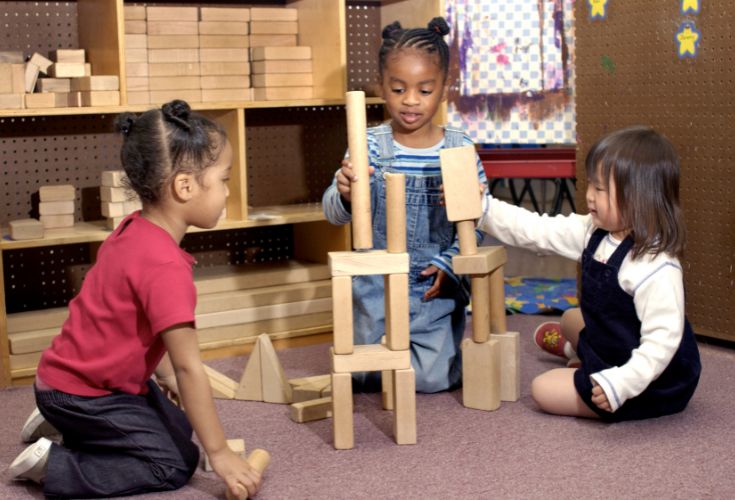
One week might turn into days of building and rebuilding.
Another might center around mixing, comparing, or movement.
That flexibility isn’t a lack of structure—it’s responsive teaching.
Curiosity and STEAM Go Hand in Hand
STEAM doesn’t need to be a separate block or special activity.
It’s already happening during play:
- science in cause and effect
- engineering in building and redesigning
- math in patterns, quantity, and spatial thinking
- art in expression and creativity
- technology in tools, systems, and problem-solving
When teachers know what to look for, STEAM becomes visible everywhere.
The Teacher’s Role in a Curiosity-Led Classroom
This approach asks teachers to do something different—not less.
The role shifts from directing learning to guiding it.
Teachers:
- prepare the environment
- observe closely during play
- document learning through notes, photos, and reflection
- gently extend curiosity with questions, materials, or challenges
This kind of teaching requires intention, skill, and trust.
Planning Looks Different And Lighter
When curiosity is the curriculum, planning changes.
Instead of asking:
What activity should I do next?
Teachers ask:
What are children trying to figure out?
That one question reduces overwhelm and keeps learning meaningful.
Why This Belief Matters
This belief gives teachers permission to:
- plan less and notice more
- trust what they see
- respond instead of control
- let learning unfold naturally
It brings teaching back to what matters most: connection, curiosity, and joy.
Our Philosophy
Children’s curiosity is the curriculum.
Our role as the educator is to prepare the environment, observe closely, and gently extend STEAM learning through play.
This belief is the foundation of everything we do at Preschool STEAM.

Leave a Reply